

I read a recent blog post about AI in education by Neil Almond, and it has been playing on my mind, not because I disagreed, but because it asked exactly the right questions. What’s the real purpose of technology in education? And what are the risks if we get it wrong?
As someone who leads computing in a primary school, I often return to a simple truth when asked what the subject is really about:
Computing is not about teaching children how to use computers. It’s about teaching them how to think.
That statement might sound trite in the face of rapidly evolving AI tools and edtech platforms, but I’d argue it has never been more important.
Why the AI Hype Isn’t Enough
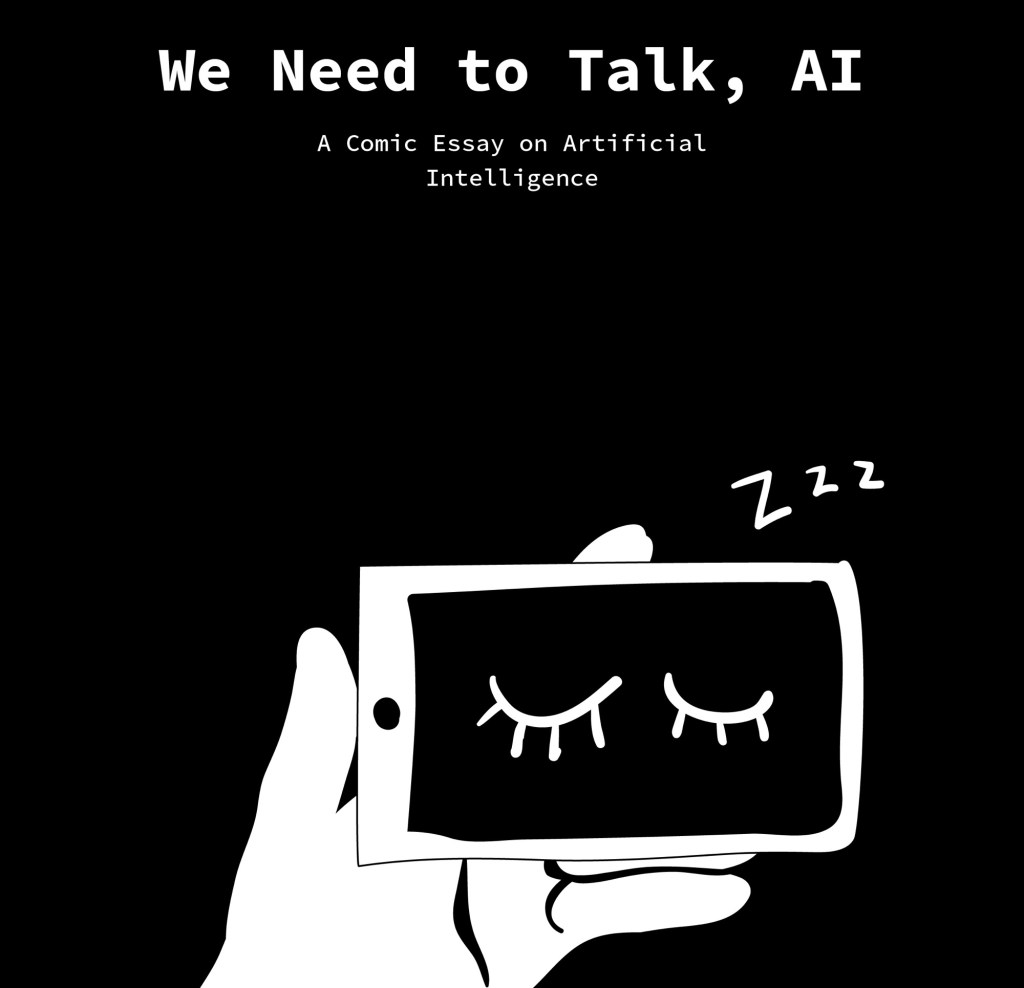
Image from – https://weneedtotalk.ai
Let me be clear: I use AI regularly in my own work, this blog post has been proofread by an AI powered software and then again by me. It helps with admin tasks, drafting emails, and summarising policies, all things that support my role without substituting for the expertise it demands. However, I’m sceptical about AI’s growing presence in classrooms, particularly when it’s presented as a shortcut to pupil learning and even more so when children are using it themselves.
The Education Endowment Foundation (EEF) continues to highlight the importance of metacognition, cognitive load, and retrieval in effective learning. None of these principles are disrupted or affected, let alone transformed, by AI. Human learning is bound by particular traits such as needing to pay attention to the right things, encoding information into long-term memory, and retrieving it regularly. These facts won’t change just because the tools have.
So while an AI might guide a child to produce a Scratch program or generate an animated story, it does not mean the child has learned to think computationally. And that, for me, is the crux of the issue.
Teaching to Think, Not to Prompt

In primary computing, we don’t teach children how to build a chatbot, we teach them how to break problems into steps, debug errors, recognise patterns, and persevere with complex problems. These aren’t solely computing skills. They’re thinking skills. If AI steps in too early, offering a final product without any effort, or a pre-built solution before struggle – then the thinking is short-circuited. Without thinking, there’s no learning.
The EEF’s ‘Using Digital Technology to Improve Learning’ review makes it pretty clear: technology only enhances learning when it’s integrated with quality first teaching and clear intentions. Tools like AI can’t replace the preparation needed to teach well, and they shouldn’t be expected to.
If anything, the rise of generative AI reminds us what we should value most in education: the process, not the product. I often talk about the importance of the design process in computing and how GCSE and A-Level weights this stage more than the outcome. Which is why Computing must not become a subject about producing flashy outputs, but about developing disciplined, deliberate, resilient thinkers.
Equity and Access: AI Is Not Neutral

Image from – https://medium.com/@CRA1G/the-evolution-of-an-accidental-meme-ddc4e139e0e4#.pqiclk8pl
Another concern which the blog post rightly raises is equity. AI, like all technology, creates winners and losers. Who gets access? Who gets guidance? Who benefits?
The pandemic, laid bare the lack of digital equity and showed that access to digital tools didn’t guarantee meaningful learning experiences. This was especially true for pupils in disadvantaged communities. AI threatens to widen this gap further if not used responsibly. We need to ask: will children in every context learn to think critically with AI, or will some simply learn to depend on it?
This is where effective and forward thinking subject leadership matters. As computing leads, we have to ask the hard questions, resist immediate change, and push for careful and thoughtful integration rather than blind adoption.
The Myth of the Digital Native

Image from – https://ositomedia.co/osito-blog/what-are-digital-natives-and-digital-immigrants
There’s also a persistent myth that children are ‘digital natives’ who can somehow intuitively understand technology. Yet using a touchscreen or watching a YouTube tutorial does not equate to understanding computational thinking. I agree that children have been able to teach themselves incredible things such as programming, special effects and dance through their experimentation with technology. However, any Year 5 and 6 teacher will tell you that watching YouTube does not make you a proficient user or a responsible one, at that.
What we are seeing more and more is digital fluency without digital wisdom, and that’s a dangerous combination.
Children might be able to prompt an AI tool to write a poem, but do they understand what a variable is? Can they build a loop? Do they know why algorithms even matter as a concept? These questions are the foundation to the computing curriculum. We need to be wary of letting AI tools replace these.
The Human Core of Computing

Image from – https://medium.com/@hal.is.writing/the-human-computer-%EF%B8%8F-5376503d51ed
Ultimately, I lead computing in my school because and I believe it builds something essential: the capacity to think clearly and solve problems creatively. I’m not preparing children for the latest shiny tool. I’m preparing them to be positive digital citizens that exist in a future where adaptability, curiosity, and logical reasoning will matter far more than prompt engineering.
Computing is the only subject, perhaps with the exception of maths, in my view, whose disciplinary core is reasoning. If we allow AI to take over too much, we risk turning the subject into a series of interactions with a screen, rather than a rigorous exercise in problem-solving.
We’ve already seen what happens when we rush into technology without considering its long-term effects. Social media and smartphones, now ubiquitous, have created both unfettered access to information and increased anxiety about almost everything. With AI, we need tread more carefully.
Conclusion – Lead Thinking, Not Fluency
Yes, AI might help us write policies, draft reports, or plan lessons. But when it comes to children, we need to keep our purpose clear. Computing is not about handing over thinking to machines. It’s about building children’s capacity to think for themselves.
The blog that prompted this reflection ended with a quote from Jacob Bronowski:
“Man is unique not because he does science, and is unique not because he does art, but because science and art equally are expressions of the marvellous plasticity of mind.”
Let’s not outsource that plasticity before it even has time to take shape. Computing should be led towards challenge not convenience. Ultimately we are still teaching children how to think.
As always thank you for reading. If you are interested in any more of my rambles on computing you can find more in my upcoming book – Learning To Lead Computing by Karl McGrath & Allen Tsui. You can preorder now from Amazon or John Catt directly 👇




 MRMICT
Leave a comment