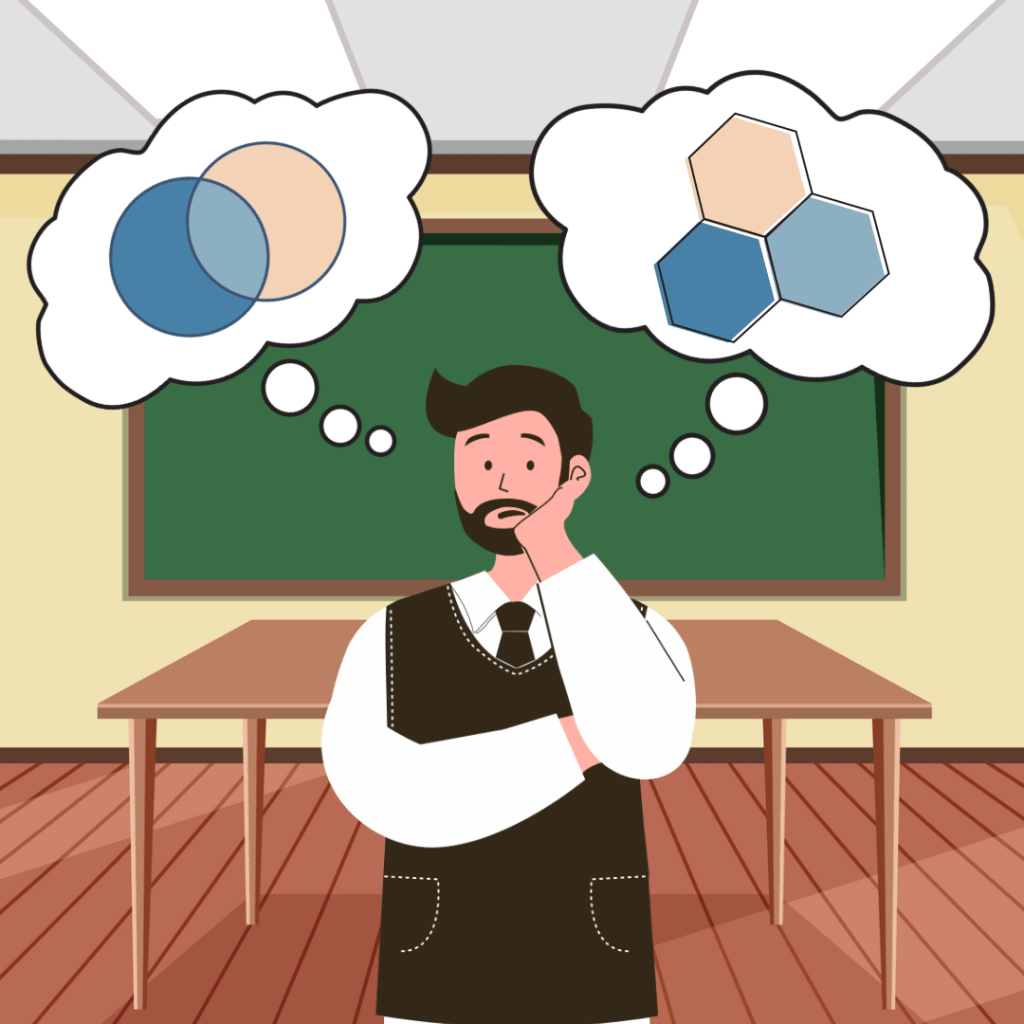
Thinking Models, are a set of visual tools designed to help students organise and understand information. Each model will often correspond to a specific cognitive process, making abstract concepts more concrete and enhancing critical thinking skills. They are versatile and can be applied across various subjects and age groups to improve comprehension, problem-solving, and communication skills.
Thinking Models and other graphic organisers have been widely supported by research, particularly for their ability to enhance cognitive processes and comprehension. They work by reducing cognitive load, allowing children to process complex information easier as well as allowing children to think deeper. Thinking models also help children to form mental representations of material, leading to better understanding and retention.
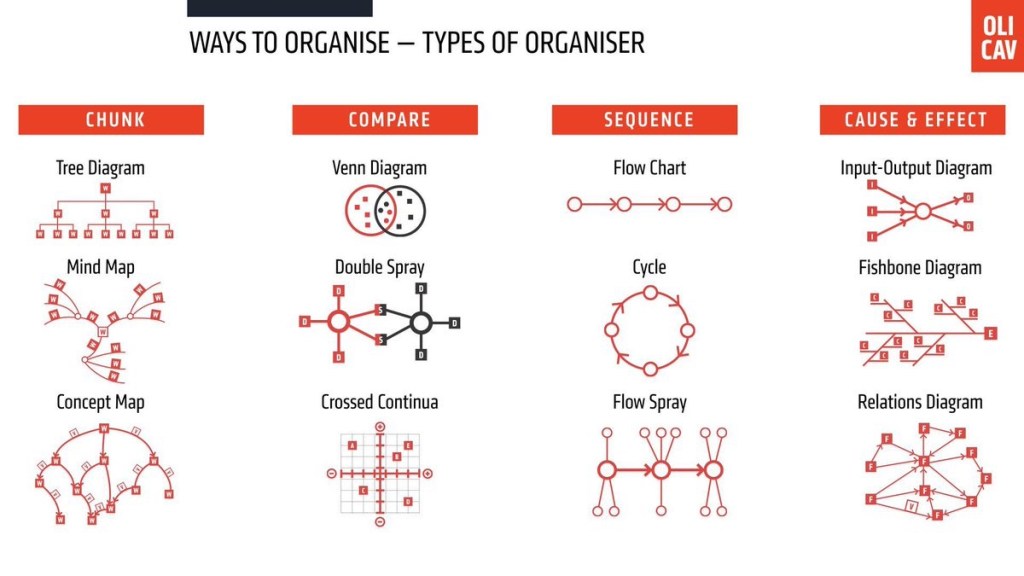
Book by David Goodwin and Oliver Caviglioli
So as part of our schools early development on #TaskDesign I embarking on a renewed exploration of graphic organisers (GOs) and thinking models, inspired by insights from David Hyrele, @MrGoodwin23 and @olicav. Having used a few of these models in the past, I was aware of how successful these can be, however, it has been a captivating journey for our staff team. As we implemented ideas from these Edu-influencers, it became increasingly evident that more educators should engage in this practice.
Our staff team has been actively experimenting with various task design models, adapting them to suit our needs. One of the more successful examples was the use of Matthew Lynch’s ‘three heads’. Whilst not specifically ‘thinking model’ the three heads allowed the children to wrestle with three related statements and work to identify which aligns the closest to their thinking. I compare it to a concept cartoon.
The openness and resilience displayed by our staff are commendable. They acknowledged that not every approach worked as intended, yet they persisted and forged ahead. What this did was allow us to build up a huge set of examples and ways in which this model worked and across subject disciplines. As the Curriculum Task Design lead, I was delighted to witness the diverse applications of this model across different year groups and disciplines, spanning from KS1 to KS2.
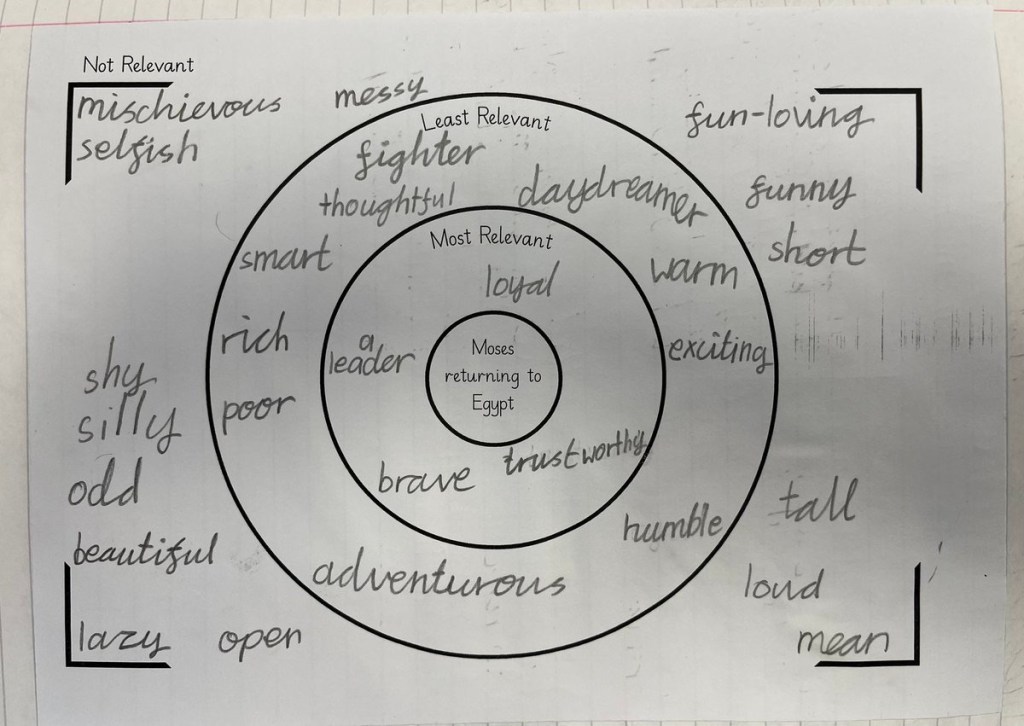
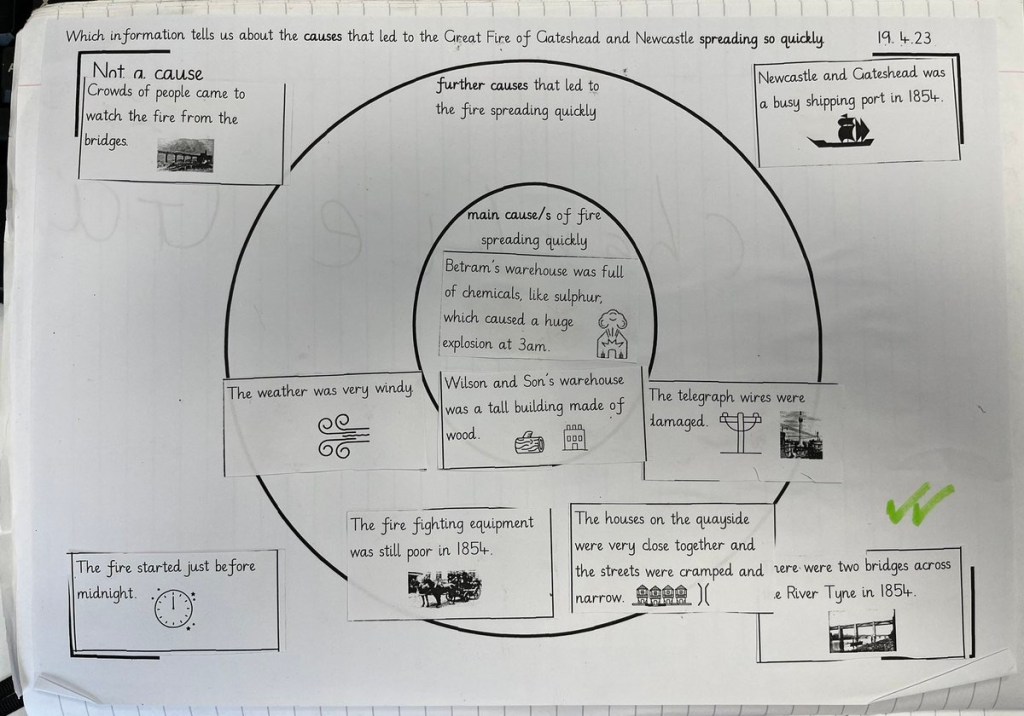
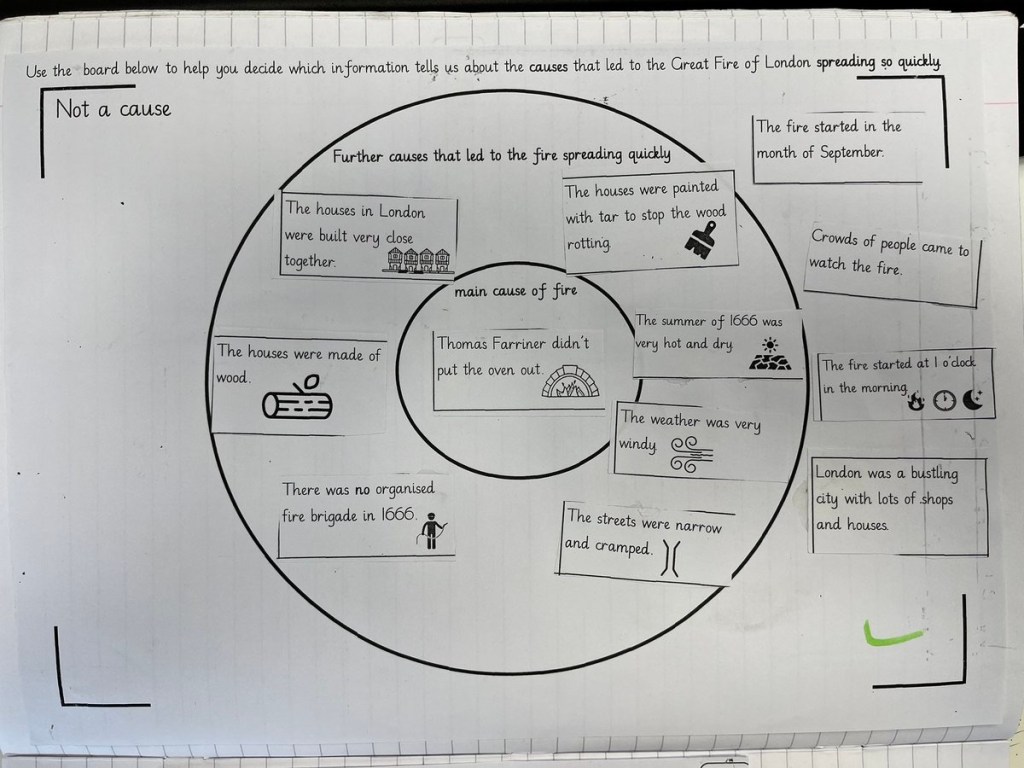
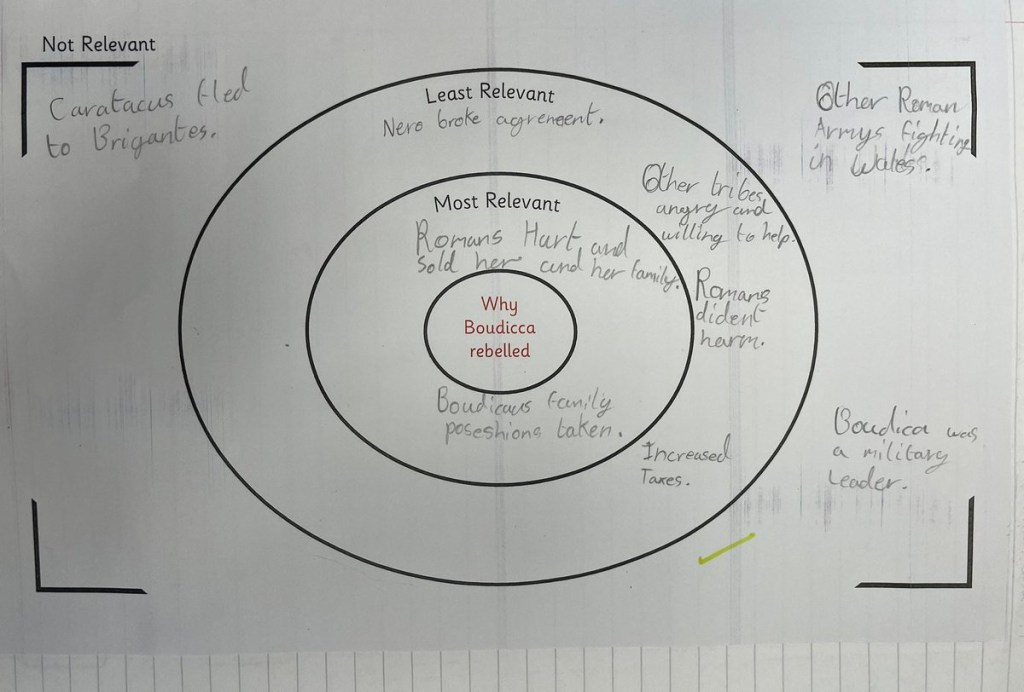
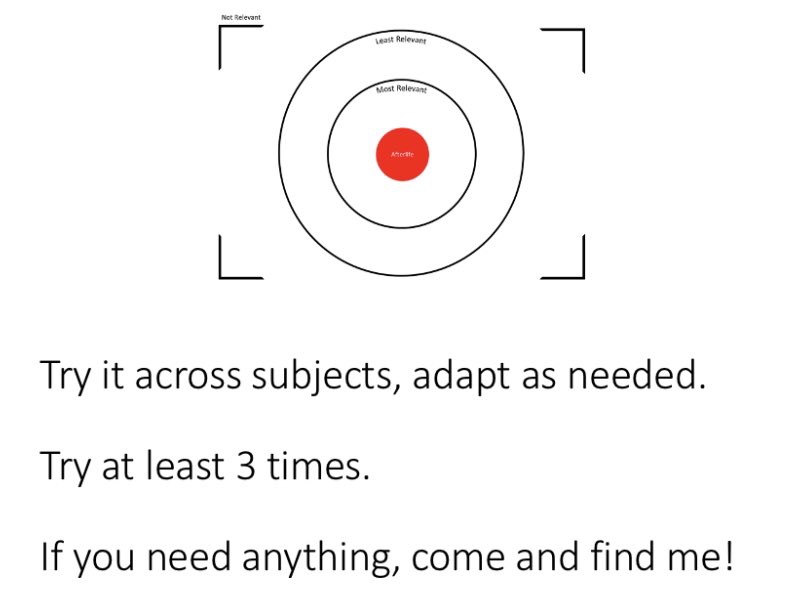
One such model was the ‘zones of relevance’ or ‘target map’. In a spontaneous conversation with our Deputy Head, who was preparing Year 6 children for SATs, a remarkable anecdote unfolded.
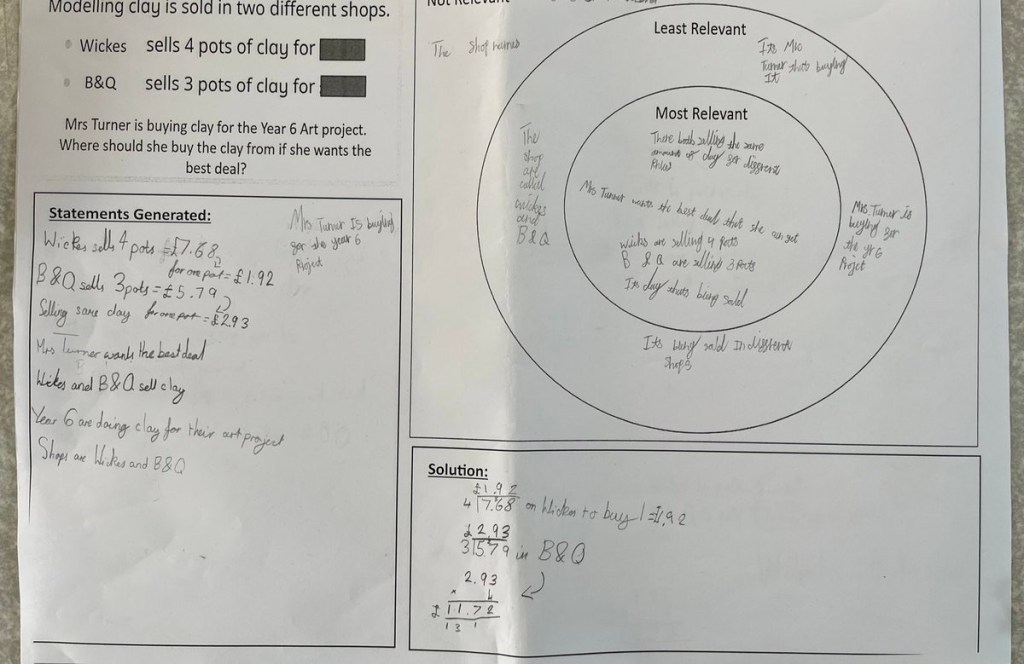
When he was discussing a reasoning problem, one child astutely said, “Well, I know Mr. S, that that bit would go on the outside of that circle thing,” referring to a specific model.
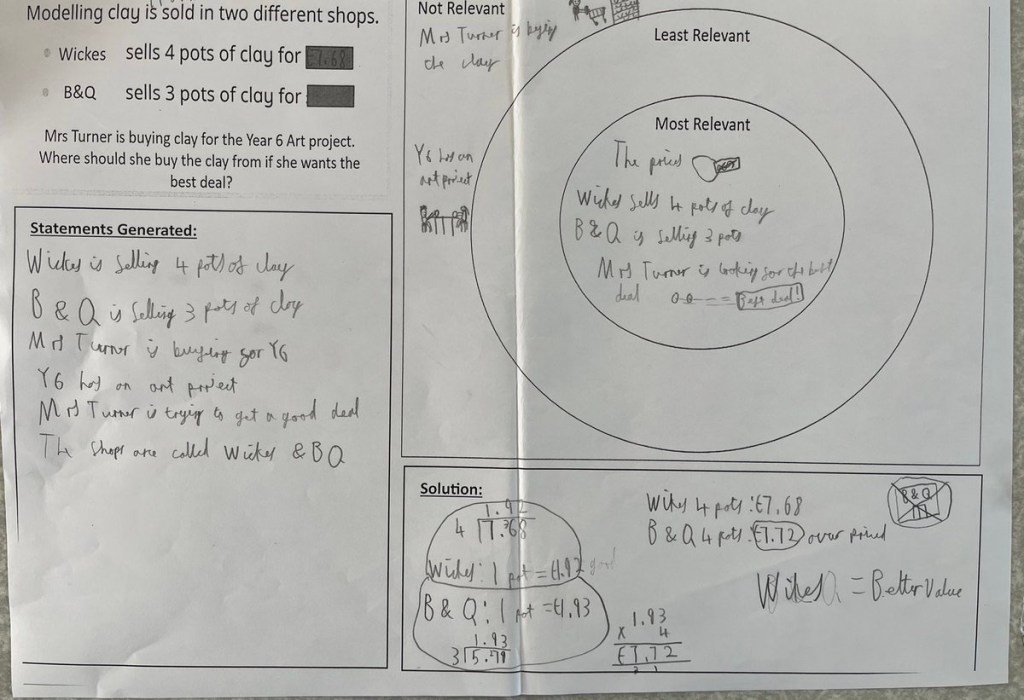
This clearly underscored the power of introducing visuals for organising ideas as now this particular hold has a mental model in which she could organise relevance.
The success of this approach lies in the combination of models and clear, purposeful, and explicit teaching. I would refer you to my previous blogs on ‘pedagogy’ here, particularly with reference to its importance in task design.
The intentional use of the model in a problem-solving lesson left a lasting impact on the child, enabling her to discern relevance in math problem-solving.
Highlighted in ‘Organise Ideas: Thinking by Hand, Extending the Mind’ (https://amzn.eu/d/i3OVMBa), the model has become a valuable tool for facilitating clear thinking and understanding. This lesson exemplifies the concept of the ‘extended mind’ or utilising ‘the external memory field’, providing a simple yet powerful visual GO for the student to internalise, aiding in sorting and discerning new content.

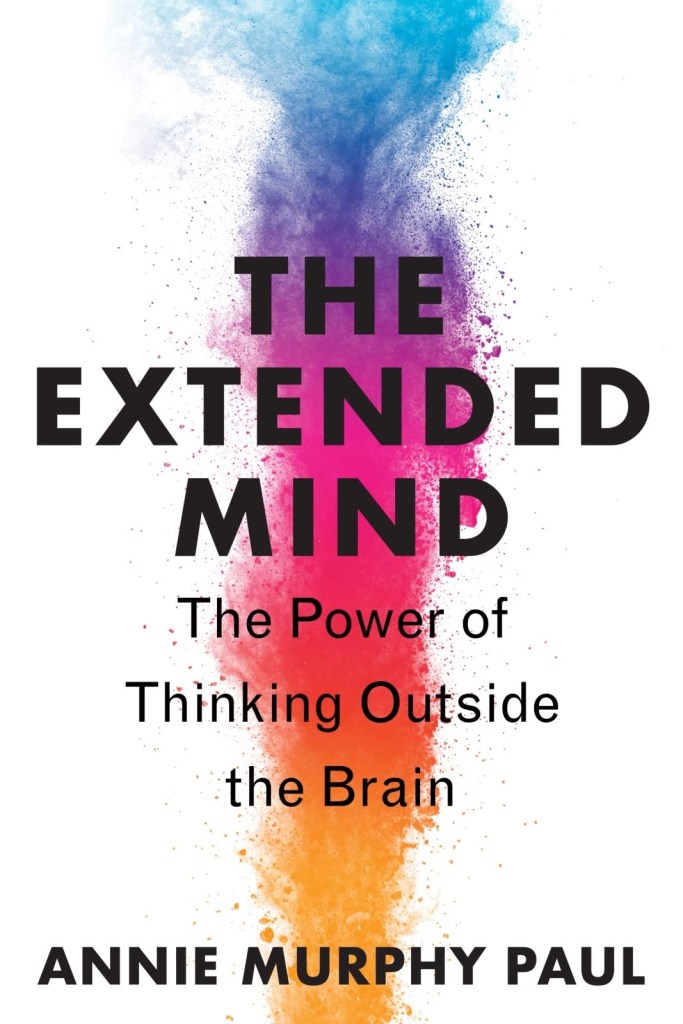
Annie Murphy Paul’s work on the “extended mind” concept further supports the use of external tools like graphic organisers. According to her research, these tools extend our cognitive abilities by acting as external memory fields, allowing students to offload some cognitive processes to the external environment. This frees up cognitive resources for more complex thinking and enhances metacognitive awareness, helping students reflect on their own thinking processes.
This is a success story and it emphasises the importance of purposeful planning and experimentation in education. By implementing GOs and fostering thoughtful #TaskDesign, educators can unlock new avenues for student engagement and comprehension.
The effectiveness of these tools is well-documented, with evidence suggesting that they lead to significant gains in understanding and memory. However, as mentioned their success hinges on thoughtful implementation and proper instruction. When used effectively, as demonstrated by our experiences, these models not only enhance comprehension but also empower students to apply their knowledge in diverse contexts.
As we reflect on this educational journey, let’s collectively embrace the transformative power of graphic organisers and thinking models to enrich the learning experience. Join the conversation on:

Whether on X, BlueSky, Instagram or Facebook click on the image above and start to share your experiences in implementing these valuable tools for effective education.
Join our growing Facebook group to contribute to the ongoing discussion on task design.
Feel free to get in touch to offer feedback, constructive criticism, or ask any questions on Twitter (X) @MRMICT or on BlueSky.
Karl



 MRMICT
Leave a comment