After my initial blog on Task Design, I had a number of questions. I felt how best to answer them, than to write a new blog. Full disclosure I am completely inspired by Elliot Morgans task design series and my voice may not be a needed additional one, however, I am going to provide it anyway.
In this post, I aim to delve a little deeper into why I believe task design is the next logical step in curriculum development and something that every educational leader and teacher should be considering. We’ve all been there-I’ve been there. We’ve reused resources year after year without giving much thought to the impact they initially had. The problem with this is obvious, and I would argue that, on the whole, it’s happening less frequently. However, teachers are time-poor, and this is a perfect breeding ground for this kind of behaviour. So, let’s change it.
Are you a school leader, whether that’s a subject leader, curriculum leader, or senior leader? Then this bit is for you. Curriculum development has been driving schools over the last 2 to 3 years, with an inevitable pause during the pandemic years. What I’ve seen and heard over those few years is a sharp focus on what we WANT to teach and in what order-the curriculum, with what appears to be little thought into what is happening in the classroom.
We’re at a stage now where some schools, leaders, and teachers are considering what they give to children. Whether your curriculum is developed in-house or off the shelf, you still need to consider what is going on in the classroom. However, you need to look at this through the lens of our most vulnerable children. Yes, Ofsted will be assessing the impact of any curriculum on those children. However, this isn’t the sole reason we do these things. We want all children to access everything as best we can. This is what makes your curriculum, an ambitious one.
This is WHY task design is incredibly important. I know this is going on in classrooms up and down the country, but it’s essential to give thought to the learning experiences we offer the children. It’s not good enough to simply hand them a task and expect them to engage deeply with the content.
To quote and agree with Elliot Morgan here is why I believe Task Design is incredibly important but also necessary. I have taken Elliot’s 4 reasons why task design is necessary from his blog post here.
Task design helps to facilitate the congruence between instruction, task and assessment.
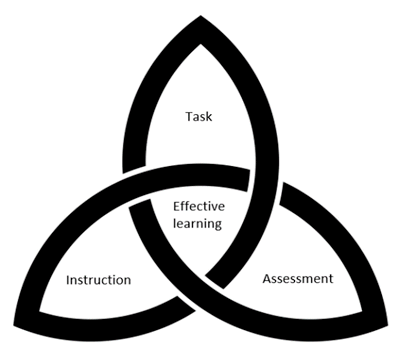
We are all aware of the relationship between instruction, task and assessment and ‘Task Design’ is the overlay that to that. When planning effective tasks you must always start with the core learning. Say you are teaching the children about the physical Geography of Europe, where do you start? With Europe as a whole, this is the context you bring to the learning.
I will always start with the bigger picture, the wider context, then you zoom in a little closer. Do you look at the whole continent or do you begin to look at specific case studies? Ultimately you want the children to know that Europe as a whole offers a huge expanse of physical geography, so you might want to contrast this. For example I have done just this but we compared Iceland to Italy, two countries with similar yet significantly different physical geographical properties.
So what is my task here, well the children need to compare two separate countries geographically. I want to include variation within my task design so I might pick 2/3 maps of each country. What features do they share? What features are different? I would use a double spray or table to compare these. This is important and what’s more important I share this conscious choice with the class.
“Today children we are comparing the physical geography of Iceland and Italy, we’re going to use this model because this helps us to clearly compare the similarities and differences.”
How often do you tell the children why you chose or designed a task? Better yet how often do you ask for feedback on it, I promise you you’ll be surprised at how intuitive and meaningful their feedback and guidance will be.
Now the children have interacted with the learning how do you enable some deeper connections? This is honestly one of my favourite parts of task design. Asking questions like: What factors contribute to the physical differences between Iceland and Italy? How do these differences affect the landscape and plant life in each country?
This is when you can really assess the depth of the children’s understanding with their learning. If they can start to make novel connections then they are able to synthesis and make meaning for themselves.
Without the careful thought given to task we end us wasting valuable learning time and essentially throwing away the 20 minutes or so, of explicit teaching time.

We have all been there, you spent the instruction time developing a clear model for the learners to synthesise and then when it comes to task they can’t remember or the task doesn’t mirror the learning experience. What happens? “Mr McGrath I don’t understand.” Ok so what has gone wrong here?
I am a firm believer of the task mirroring the instruction as well as building in variation to ensure the children see the learning in as many contexts as possible (I should add that the variation should be purposeful and not misleading). I will give you an example of how this recently fell down. In our Science learning on the heart we had truly immersed the children in the heart and showed a variety of models. However, until our dissection of the heart we hadn’t actually shown the children a diagram of the heart as a whole. Around a third of my class genuinely believed the heart looked in our chest as it does in the diagram below.

Simple mistake but one with far reaching implications. This is where the importance of task design comes in. Every single step, question and interaction in a lesson is task design. This is why I believe strongly in using visual models rather than blank whiteboards, I want each episode within the lesson to serve a purpose.
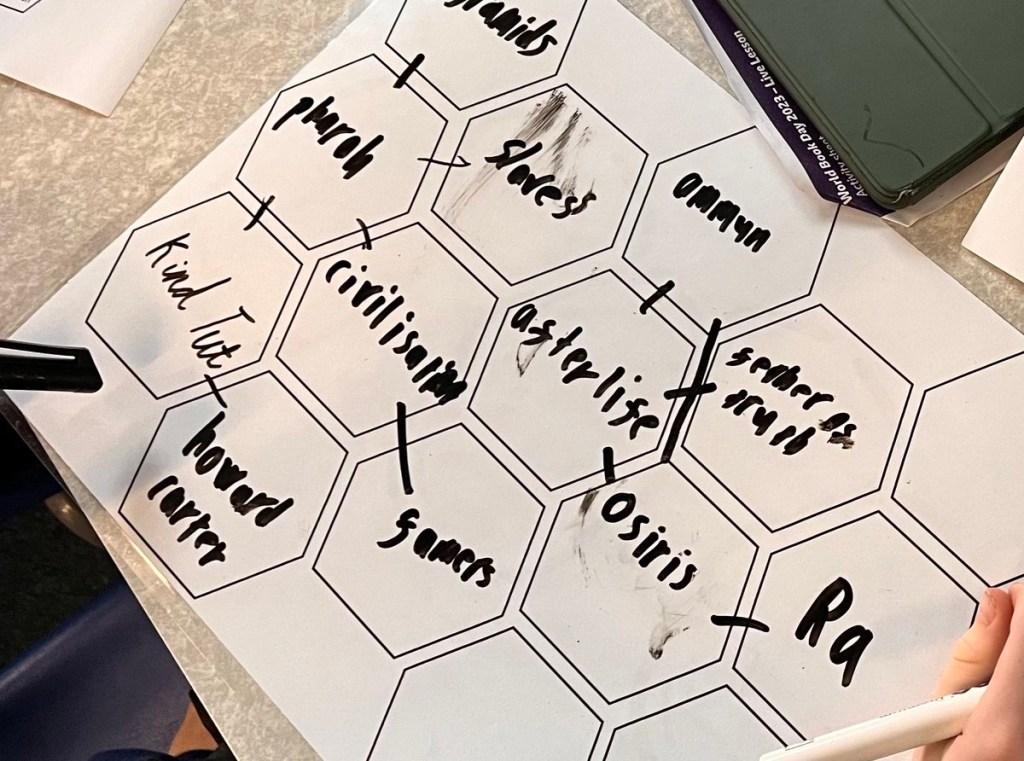
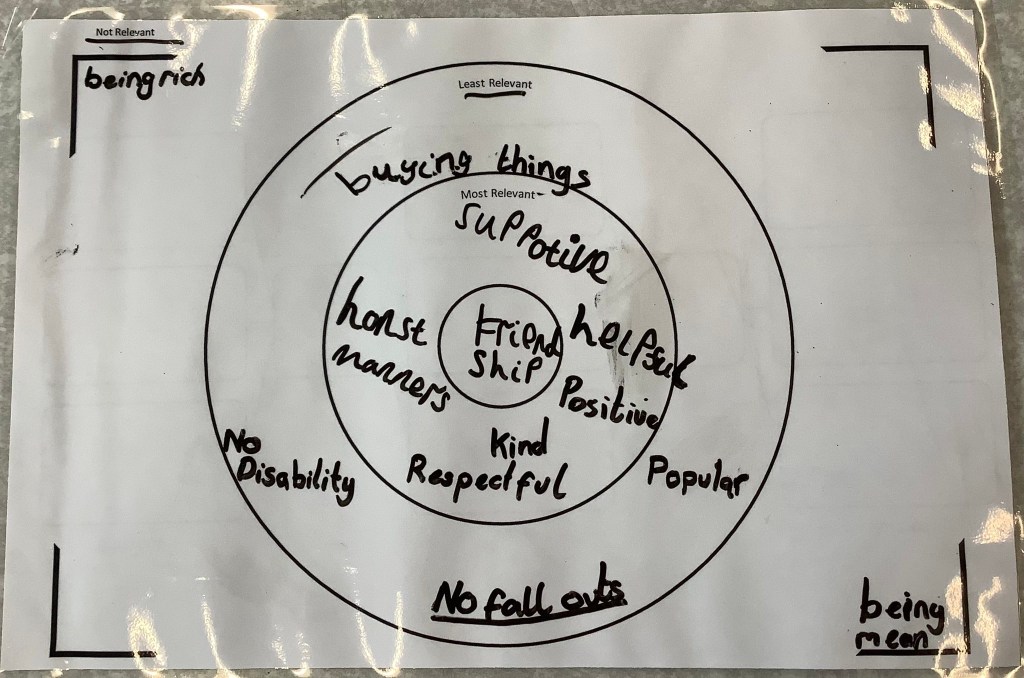
So take the time to think carefully about what you think is the best task for the children to demonstrate the understanding and then is there a way you can take it further and allow them to make deeper connections?
Considering the task design process during lesson or curriculum planning may facilitate better discussion between departments, year groups, schools in a trust etc. This, in turn, leads to more effective tasks.

This is such an important point. What we have seen in school as a result of our approach to task design is the discussion that has emerged around task design. Having teachers share things that they have done and how it has worked has in turn allowed us to think differently about our tasks. I personally am learning an incredible amount about my own task design choices based on my observations or early years and key stage 1 colleagues.
Our approach to curriculum has also freed staff us to think more about the tasks and how we get the children to the learning because the subject leads have laid out the sequence of learning. So if I am teaching the Egyptians in Year 5 I don’t have to consider the narrative or sequence of learning because our history lead has done this thinking and done so because it explicitly moves from and leads to clear areas across school.
I also cannot agree more with Elliot here, our task design approach has led to far more effective tasks. Teachers are tweaking and seeing the benefit hugely.
At its heart, task design encourages advocacy of the learner. It demands that we consider the learner’s perspective (e.g., of prior knowledge, how the learner may attempt the task itself, what the learner should or will think about during the task attempt etc).
This is where task design clearly becomes the bridge between the curriculum and the student’s learning journey. It’s the missing piece that can turn a list of objectives and topics into a meaningful and engaging educational experience. It’s the process that transforms the content into a dynamic and interactive adventure for the students.
We need to be able to enable the learner to construct a clear image of what we are trying to teach here. Osborne and Wittrock 1983 called this Generative Learning theory. You can think of it as you wish, student centred, learner focussed but what’s clear is we need to consider what has gone before, what we want the children to engage with and what are we building towards when design our tasks. Remember tasks are not just the thing we give at the end of the lesson anymore. Task should be plentiful, they should be quick questions, mini discussion with a provided framework. They should be guided and independent practise and then it should be clear and meaningful assessment.
Consider this: you have a meticulously crafted curriculum, well-thought-out, with a logical progression of topics and objectives. But without effective task design, all of this can fall flat. The curriculum provides the what, but task design offers the how. It’s the catalyst that sparks curiosity, fosters critical thinking, and helps students apply their knowledge in real-world situations.
Task design is about creating activities, assignments, and challenges that go beyond mere completion of work. It’s about designing tasks that make students think deeply, connect ideas, and truly understand the subject matter. A well-designed task should inspire students to ask questions, analyse, and synthesise information, and draw meaningful conclusions. It should encourage them to be active participants in their own learning journey.
In the current educational landscape, where curriculum development is a key focus, it’s important that we don’t overlook the crucial role of task design. The curriculum sets the direction, but it’s the task design that propels the journey. It’s the element that transforms a passive learning experience into an active, engaging, and transformative one.
So to stamp on my previous title, task design is not just a piece of the puzzle; it’s the single piece that makes the entire puzzle picture clearer. It’s the spark of curiosity and it fosters a lifelong love for learning. It’s the bridge between theory and practice, between curriculum and student engagement.
So, let’s all embrace the power of effective task design in our educational journey and ensure that no child is left behind in the pursuit of knowledge and understanding.
Feel free to get in touch to offer feedback, ‘kind’ criticisms or to ask any questions on Twitter (X) @MRMICT
Karl



 MRMICT
Leave a comment